Monetize your company's operational data
micro1 helps companies turn their operational data into new revenue while advancing frontier AI
.avif)
Your company already has valuable data to train frontier AI models
Every day, your teams generate operational data and business workflows that capture how work gets done in the real world
micro1 helps companies monetize those assets through data licensing opportunities

Real business operations that help train frontier AI
Operational data that capture how businesses actually operate. These assets help frontier AI models learn how companies work in practice.
.png)
Operational documentation
SOPs, knowledge bases, internal documentation, CRM data, project histories, and QA processes
.png)
Decision-making patterns
How teams evaluate information and make operational decisions
.png)
AI performance feedback
Human feedback on AI outputs in real business environments to improve model performance
Built with privacy and control first
We understand business data can contain sensitive information. Every partnership is designed around your organization's requirements, with clear controls over what is shared, how it is handled, and what is never included.
Before any participation, together we define:

Approved data scope and clear boundaries

Security and confidentiality standards

Anonymization and redaction requirements

Internal approval processes and permissions
.avif)
How it works
A simple, privacy-first process designed for long-term participation.
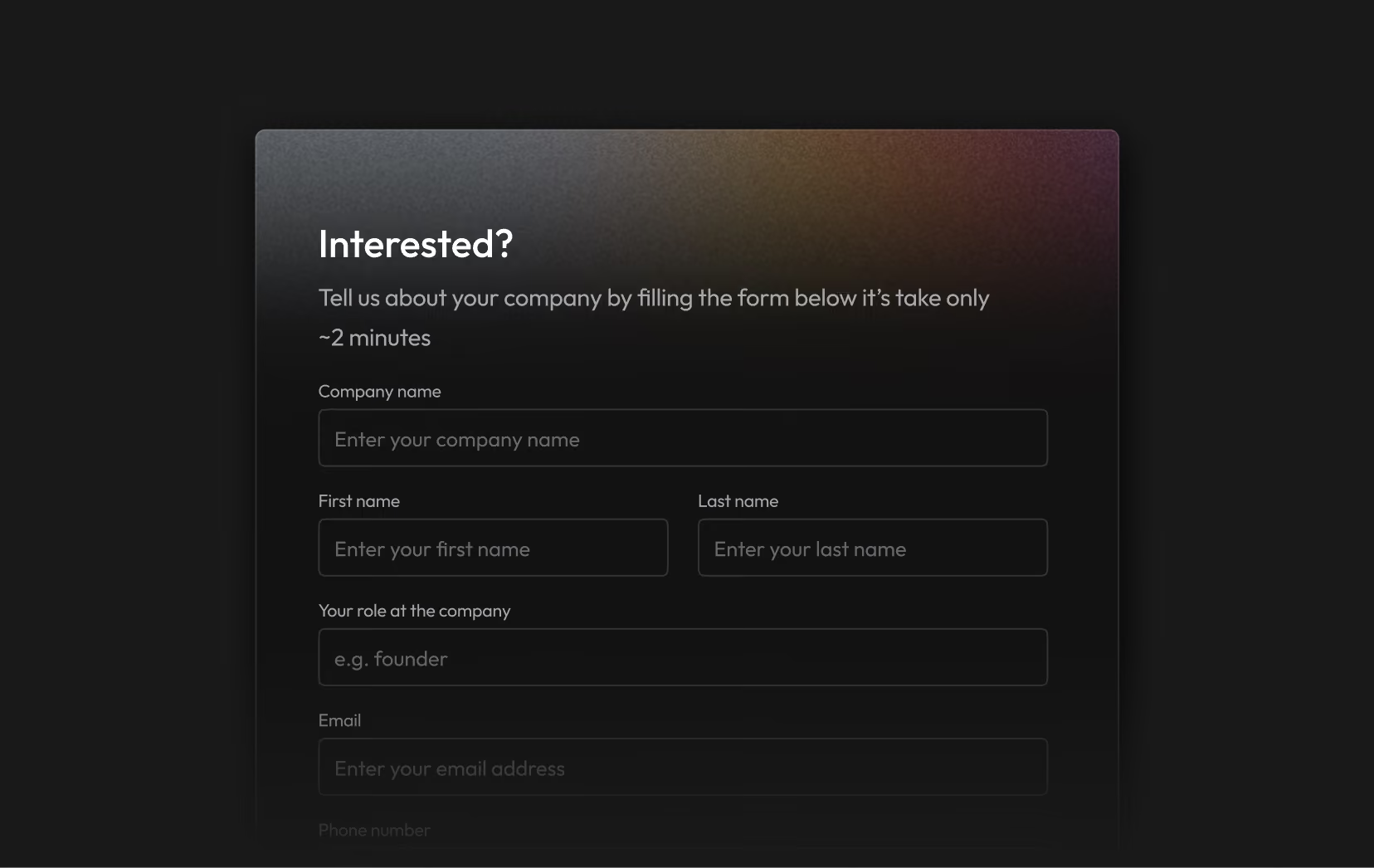
1
Get started
A simple assesment process designed to identify the right partnership for your company
2
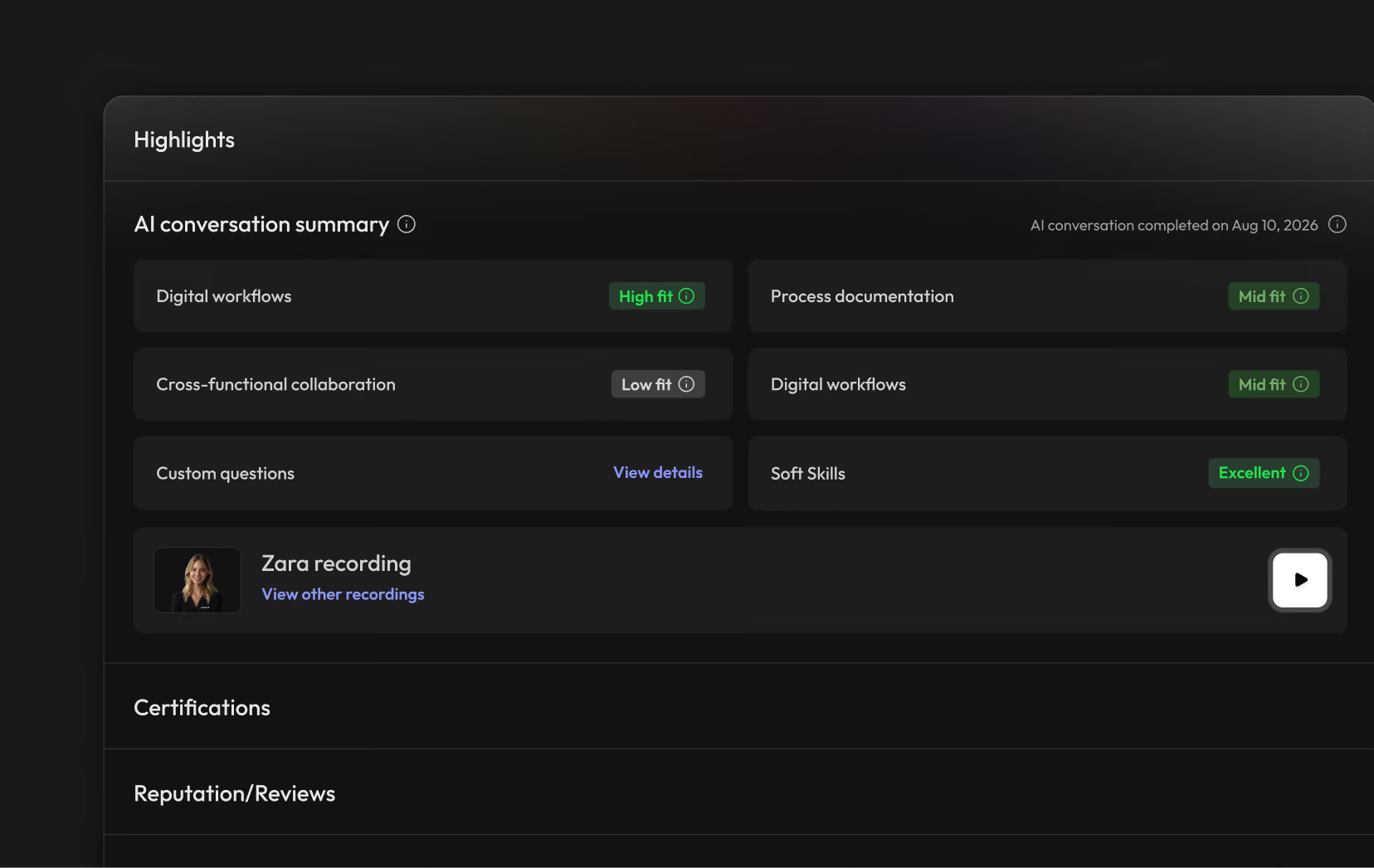
Evaluation
Our team reviews your submission to determine whether your company is a fit
3
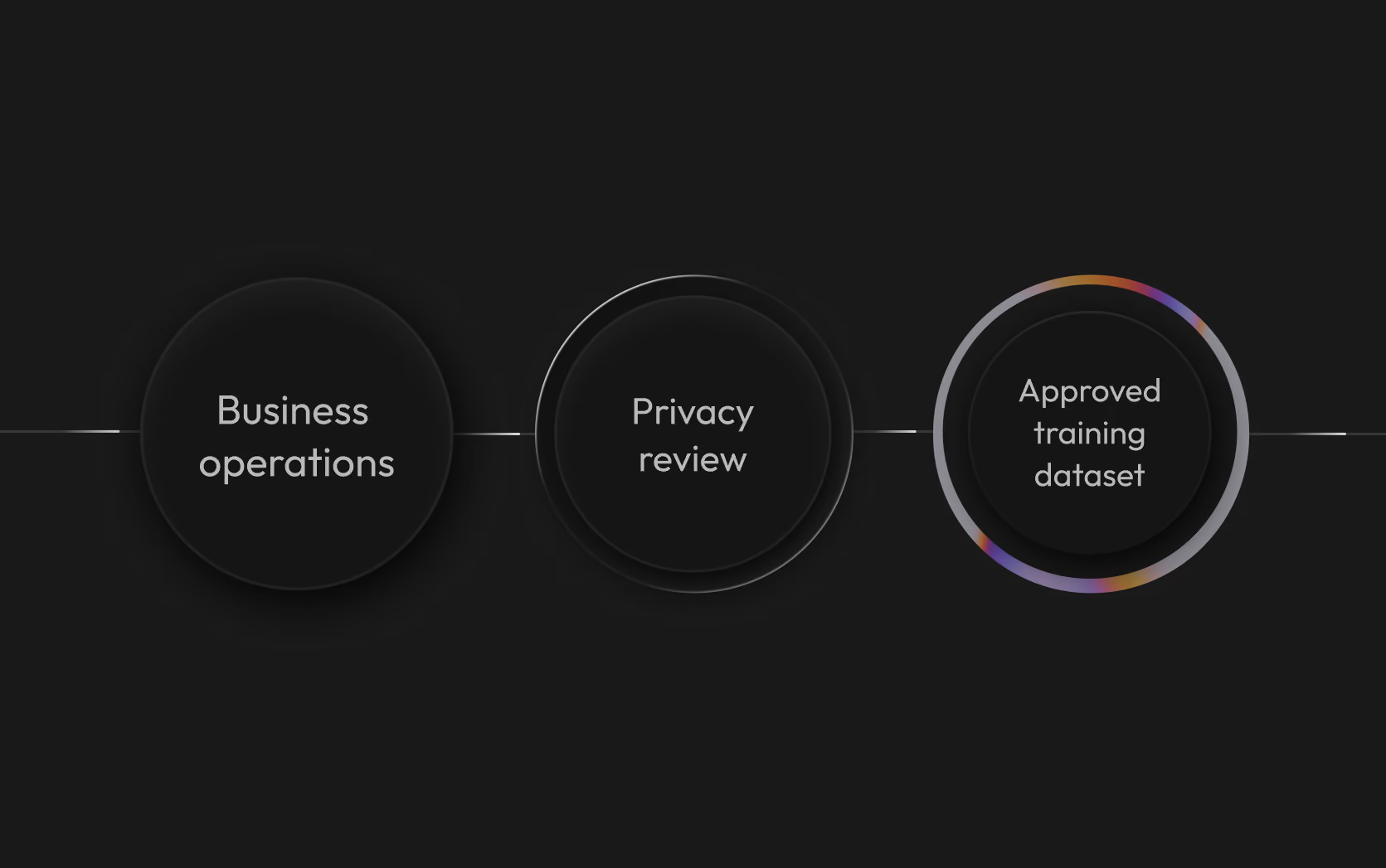
Discovery
If there's a potential fit, we'll request additional information and schedule a discovery call to discuss your data and privacy requirements
4
Partnership
If approved, we'll finalize the agreement and data requirements and begin the partnership
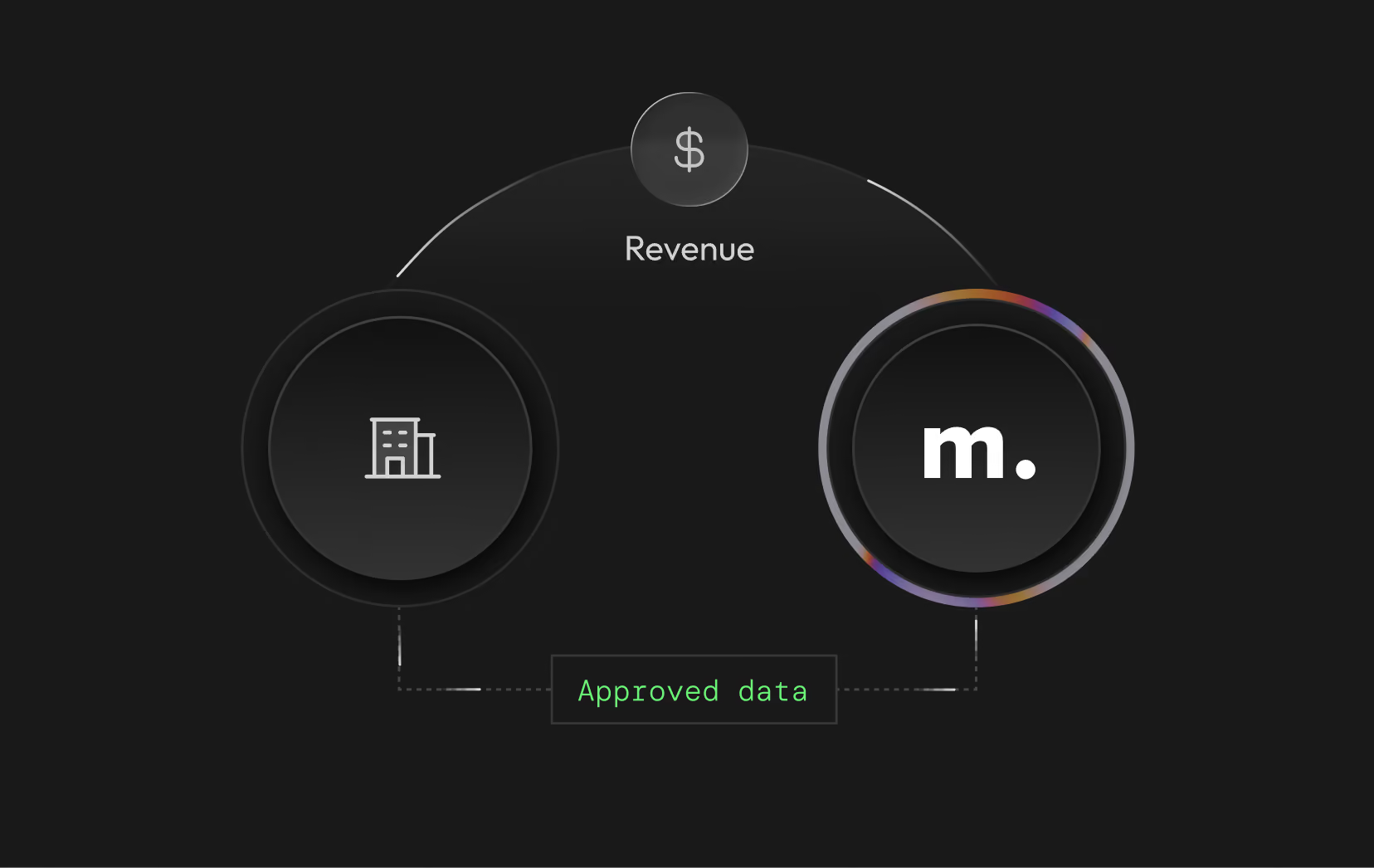
Turn operational data into enterprise revenue
Compensation is based on the quality, uniqueness, and value of the data provided
$100k+
Qualified Enterprise Data Partnerships
$500k+
Large-scale operational datasets or ongoing participation across multiple teams and business functions
$1M+
Highly unique, proprietary operational data with significant value for frontier AI development
Operational data from every industry can contribute
Examples of the operational data and workflows that help train and evaluate frontier AI models

Software & engineering
Source code documentation, engineering workflows, bug tracking, product planning, and technical knowledge bases

Finance & accounting
Financial processes, SOPs, reconciliations, approvals, reporting workflows, and operational documentation

Customer support
Support documentation, ticket workflows, QA processes, customer operations, and knowledge management

Sales & CRM
CRM data, sales processes, playbooks, customer lifecycle documentation, and revenue operations

Legal & contracts
Policies, contract workflows, review processes, governance documentation, and compliance procedures

Operations & logistics
Operational SOPs, logistics processes, fulfillment workflows, inventory management, and internal operations

Featured by

micro1's approach to build the next generation of AI using real businesses operational data.
Frequently asked questions
What does micro1 offer companies in exchange for their data?
micro1 partners with organizations to help improve AI systems using real-world business workflows and operational knowledge. Participating companies receive compensation based on the value of the data provided and may also benefit from improvements tied to the specific use cases they contribute. Data is used to evaluate and improve AI capabilities in realistic enterprise environments.
What kinds of companies are eligible for the program?
For our Enterprise Data Partnership, we're looking for operationally mature companies with 30+ employees, established documentation, and high-quality operational data such as SOPs, knowledge bases, CRM data, project histories, and internal processes. We currently prioritize US companies, followed by other Western markets.
What types of data are you looking for?
We are looking for data that reflects how work is actually performed within an organization. This may include standard operating procedures (SOPs), process documentation, internal knowledge bases, workflows, templates, operational frameworks, and other business process artifacts. The most valuable datasets capture real operational expertise, decision-making processes, and repeatable workflows that help AI systems learn how work is executed in real-world business environments.
How is company data protected?
Protecting customer data is a core principle of the program. Personally identifiable information (PII) is removed when relevant, access is restricted to a limited number of authorized team members, and customer data is processed through isolated pipelines that prevent it from being commingled with other engagements. Data is retained only for agreed periods, companies have the opportunity to review representative samples before use, and deletion requests are honored according to the terms of the engagement. In addition, employees with access to data systems use company-managed devices and follow established security controls and training requirements.
Who owns the data?
Companies retain ownership of their underlying data.
What happens to the datasets after they are shared?
After data is shared, it is processed according to the agreed use case and handling requirements. Depending on the nature of the data, personally identifiable information may be removed and certain datasets may undergo synthetic rewrites that preserve workflow structure while reducing direct ties to original records. Data is retained only for a limited period based on agreed retention policies, and companies are given the opportunity to review representative samples before prepared data is used. Upon request or at the end of an engagement, data is deleted according to the agreed retention and deletion terms.
How is company compensation determined?
Compensation is determined based on the characteristics and value of the data being contributed. Factors considered include dataset size and volume, workflow complexity, data quality, domain expertise represented, and the uniqueness of the operational knowledge contained within the dataset. Each partnership is evaluated individually, and compensation is aligned with the overall value and relevance of the data provided.
How do referral rewards work?
Individuals and organizations who introduce qualified companies to the program may be eligible for referral rewards. To ensure proper attribution, referrals must be submitted through the official referral process. Referral rewards are tied to successful company placements and are paid once the referred company reaches specific revenue milestones with micro1. Reward amounts vary by opportunity and program tier, with eligible referrals tracked through the referral platform from application through qualification, signing, activation, and payout.
What happens after a company is referred?
After a referral is submitted, the micro1 team reviews the company and guides them through an initial AI interview. The interview helps assess whether the company and its data are a good fit for the program. Companies that meet the qualification criteria then move forward to partnership discussions, agreement finalization, and onboarding. Once onboarding is complete, the company can begin participating in the program.
Can companies participate from anywhere in the world?
Yes. While the program accepts referrals globally, current demand is strongest for companies based in the United States, United Kingdom, and Canada. Companies from other regions may still be considered, but selection will depend on the specific needs of active opportunities and customer demand at the time.
Can company data and documentation be in languages other than English?
At this time, we are primarily looking for companies that operate in English and maintain their documentation, workflows, and knowledge bases in English. Company representatives must also be able to communicate with the micro1 team in English throughout the partnership and onboarding process.